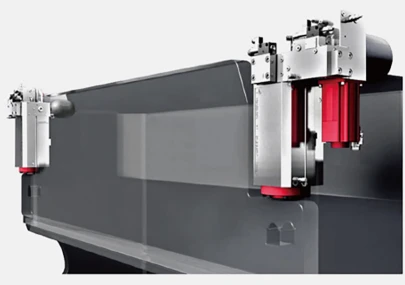
SPES / Dual-servo hybrid
The SPES platform uses a separate servo motor and servo pump for each cylinder. The two sides of the ram work together under CNC control, combining hydraulic forming force with on-demand motor operation.
Explore SPES drive →
Frame, positioning and tooling, working together.
Explore the shared catalogue assemblies below, then compare the series-specific hydraulic drives. Confirm the supplied equipment and component specifications for your selected machine.
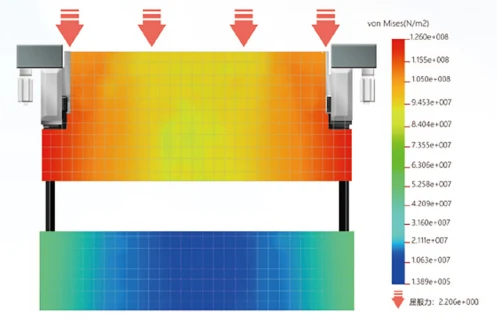
Catalogue standard
The catalogue describes a strengthened frame and a thickened, widened ram to limit deformation under bending load. The frame provides the structural base for the tooling and positioning systems.
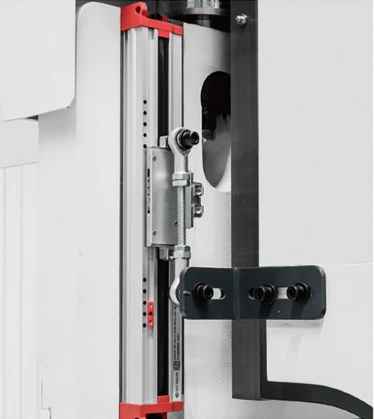
Catalogue standard
A displacement sensor measures small deformation at the machine throat. This feedback supports compensation during bending rather than relying only on the unloaded frame position.
Catalogue standard
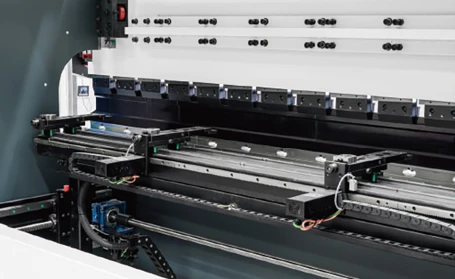
Ball-screw transmission and linear guides position the sheet against the stop fingers. The crossbeam uses a double-guide arrangement, while multi-level fingers provide different contact positions for the workpiece.
Catalogue standard
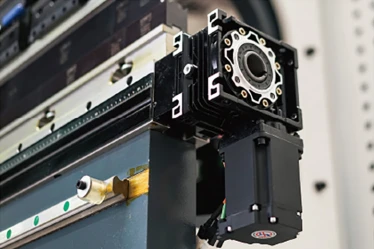
The compensation setting is calculated and controlled through the CNC system. Mechanical crowning adjusts the worktable to help maintain a consistent bending angle along the working length.
Catalogue standard
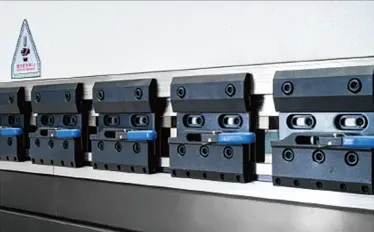
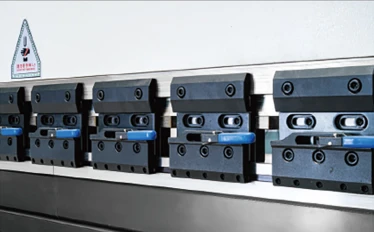
The upper-tool quick-clamp arrangement is intended to make installation and removal more convenient. It supports tool retention and positioning during setup without making hydraulic WILA clamping part of the base package.
Catalogue standard
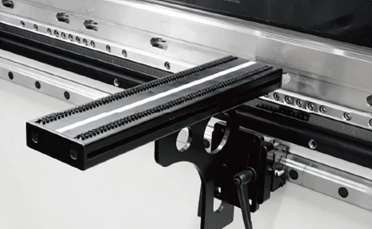
Front supports move along a linear guide and can be positioned for the workpiece. Rotation and height adjustment assist sheet support during setup and handling.
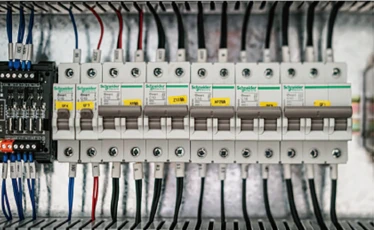
Catalogue standard
The catalogue identifies Schneider electrical components and graphite self-lubricating copper plates. The plates provide a low-friction wear surface, while the electrical cabinet brings machine control components together.
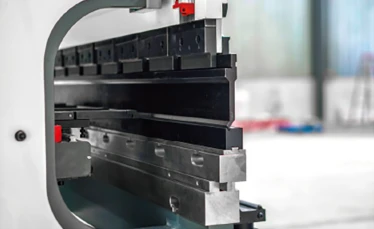
Catalogue standard
Forged and quenched press brake tooling is described alongside the lower-tool interface. The catalogue lists a double-V / T quick-change lower clamp as standard, with other holder arrangements available for discussion.
The drive architecture remains series-specific. Compare these systems alongside force, working length and model specifications.
The SPES platform uses a separate servo motor and servo pump for each cylinder. The two sides of the ram work together under CNC control, combining hydraulic forming force with on-demand motor operation.
Explore SPES drive →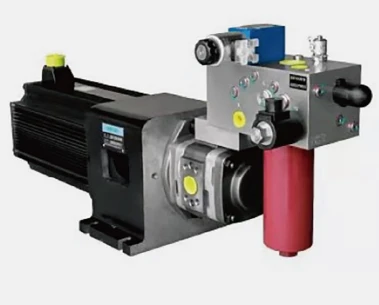
The SPS series uses a main servo motor with a single servo-pump drive. Rather than running continuously at the same demand, the pump operates according to the machine's bending cycle.
Explore SPS drive →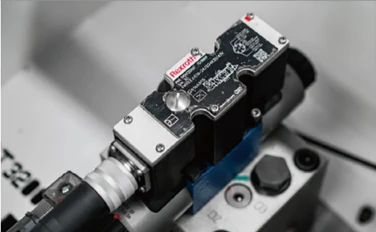
The SPC platform coordinates the two cylinders through the CNC system, position feedback and proportional hydraulic valve control. Feedback from the two sides is used to control ram position and synchronized motion.
Explore SPC drive →Use the series pages to compare machine configurations and model parameters, and discuss compatibility before selecting equipment.
Discuss the material, geometry and production needs behind your configuration.